

Basic metabolism is the amount of energy the body needs to keep an inactive awake body alive.
This action is necessary for:
- cell function and replacement
- the synthesis, secretion and metabolism of enzymes, hormones and other substances
- maintaining body temperature
- heart and respiratory muscle function
- brain function
Every organism has different energy needs, which depend on the basic metabolism, physical activity and thermogenesis, with the basic metabolism playing the main role, accounting for 60-75% of the total energy expenditure of the organism. The basal metabolism depends on several factors, such as:
- Body composition (fat mass, muscle mass)
- Age
- Gender
- Genes
- Pathological conditions
- Environment
- Smoking
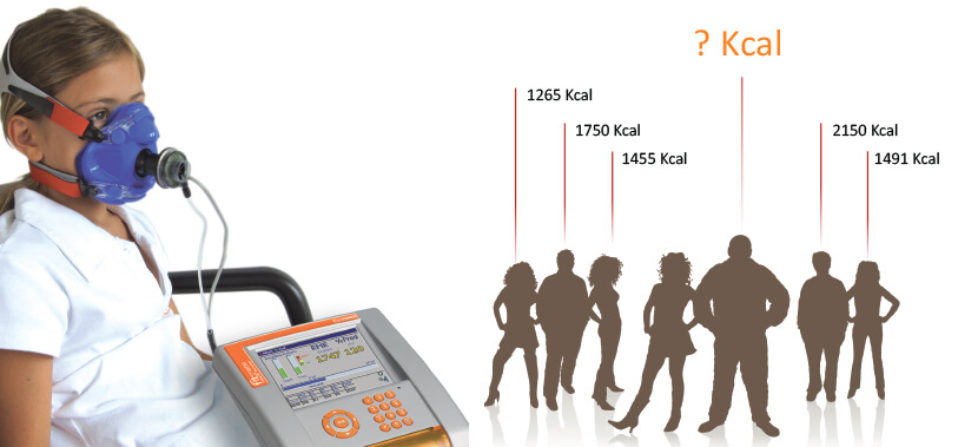
The measurement of basal metabolism can be done by direct and indirect calorimetry or using equations. By measuring a person’s basic metabolism we know the body’s actual energy needs at rest, and we are able to assess them in relation to the predicted needs of a similar organism (the average basic metabolism of a person of the same age, weight and height, as predicted by equations ).
Maintaining, losing or gaining weight is controlled by the energy balance, ie how much energy or calories it takes in through food and how much the body needs or “burns” in a day. When a person consumes more calories than he needs, then the weight increases, while when he consumes less the weight decreases.
The method of indirect calorimetry with the Fitmate metabolism analyzer is performed in the diet office. The examinee lies quietly on a bed for 10-15 minutes and breathes through a mask. Fitmate displays the results. At the end of the test the results are automatically printed by the built-in thermal printer.
Next we evaluate the result, in relation to the predicted basal metabolism.